
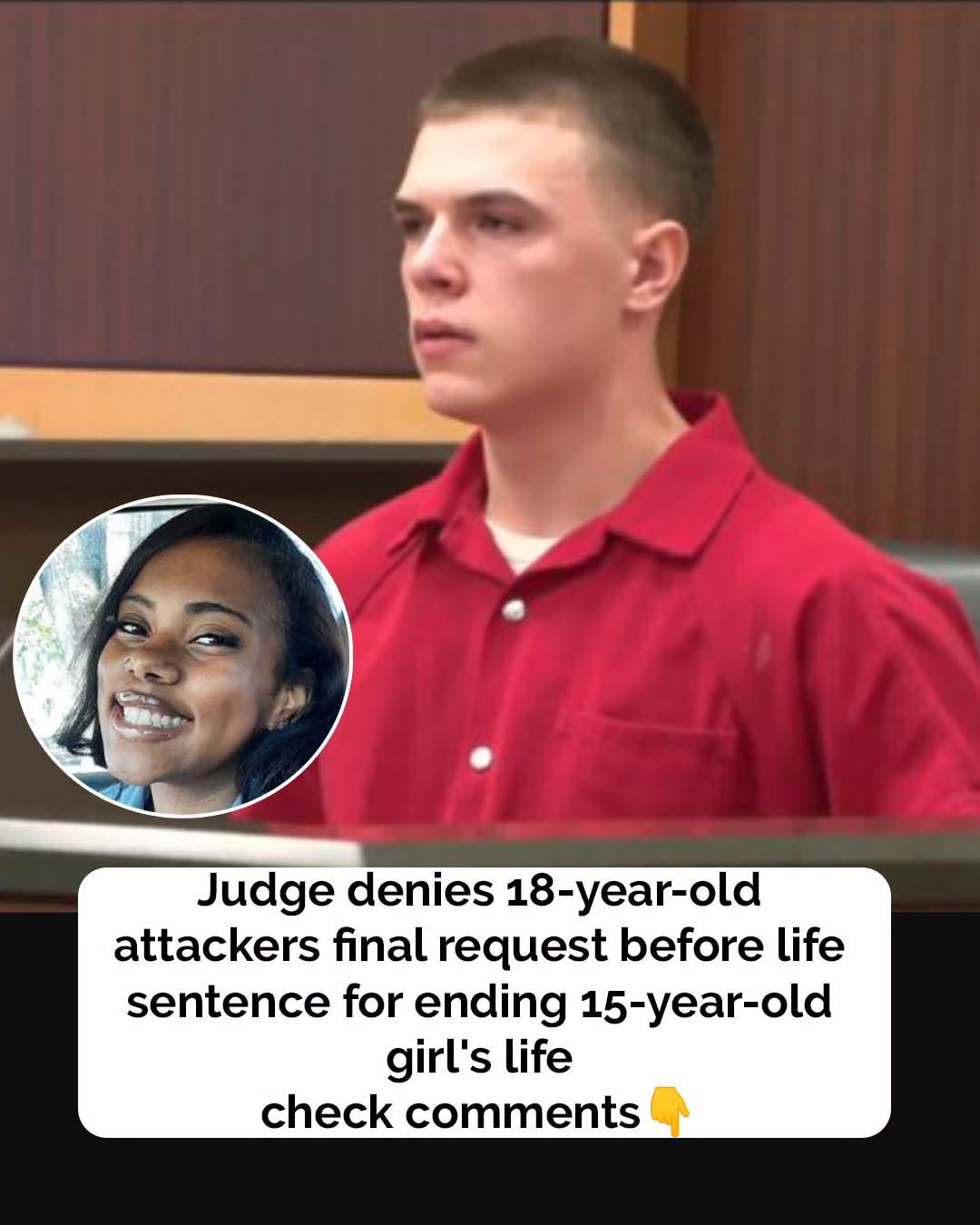
Courtrooms are often places where emotion and accountability meet. For the families involved, sentencing hearings can mark the end of a long legal process while also highlighting the lasting impact of a single decision.
In a recent Florida case, public attention focused not only on the sentence itself but also on a final request made by the defendant before being taken into custody. The judge’s decision to deny that request quickly became a topic of discussion online, with many people expressing differing views.
While opinions vary, the case ultimately serves as a reminder of the importance of responsibility, the legal process, and the lasting consequences that serious crimes can have on victims, families, and communities.
What Happened in the Case?
According to court reports, 18-year-old Thomas Stein was convicted in connection with the March 2024 fatal shooting of 15-year-old Kayla Rincon-Miller in Cape Coral, Florida.
Prosecutors stated that Stein and another individual were looking for people to rob when they approached a group of teenagers who had recently left a movie theater. During the encounter, a firearm was discharged, resulting in the loss of Kayla Rincon-Miller’s life.
Following a trial, Stein was found guilty of first-degree murder and multiple counts of attempted armed robbery.
The Sentencing
The Florida court sentenced Stein to:
- Life imprisonment for the first-degree murder conviction.
- An additional 45 years for the attempted armed robbery convictions.
The sentence reflected the seriousness of the offenses under Florida law.

The Defendant’s Statement
Before sentencing, Stein addressed the court.
According to reports, he accepted responsibility for driving during the incident and acknowledged that his actions had contributed to the outcome. He also expressed regret for the suffering experienced by Kayla’s family.
At the same time, he stated that he did not anticipate the encounter would end as it did.
As with many courtroom statements, public reactions differed.
Some observers believed the statement reflected genuine remorse, while others questioned its sincerity. Because personal intentions cannot be objectively verified, these differing interpretations remain matters of individual opinion rather than established fact.
A Final Courtroom Request
One of the most widely discussed moments occurred shortly before sentencing.
Stein requested permission to hug members of his family one last time before leaving the courtroom.
Judge Nick Thompson declined the request for physical contact but allowed verbal goodbyes.
The brief exchange circulated widely online, prompting conversations about courtroom procedure, judicial discretion, and the emotional nature of sentencing hearings.
Understanding Judicial Discretion
Judges are responsible for maintaining courtroom security and ensuring legal procedures are followed throughout every stage of a case.
Courtroom policies regarding physical contact vary depending on:
- Security considerations
- Local court procedures
- The nature of the conviction
- Recommendations from law enforcement officers responsible for custody
Because these decisions depend on individual circumstances, there is no universal rule that applies in every courtroom.

Remembering Kayla Rincon-Miller
During the sentencing hearing, members of Kayla Rincon-Miller’s family and friends described the profound impact her loss has had on their lives.
Victim impact statements are a common part of sentencing hearings in many jurisdictions. They provide loved ones with an opportunity to explain how a crime has affected their daily lives, relationships, and future.
These statements are intended to help the court understand the human consequences associated with criminal offenses.
Public Reaction
The sentencing generated significant discussion across social media platforms.
Many comments focused on:
- The judge’s decision regarding the final request.
- The defendant’s courtroom apology.
- The sentence imposed by the court.
- Support expressed for Kayla’s family.
Online conversations often include a wide range of opinions, particularly in highly emotional legal cases. Individual viewpoints may differ based on personal experiences and perspectives.
The Importance of Accountability
Criminal justice systems seek to balance several objectives, including accountability, public safety, due process, and fairness.
When serious offenses occur, courts examine evidence presented during legal proceedings before determining guilt and imposing sentences according to applicable law.
Sentencing hearings also provide an opportunity for victims’ families to be heard while allowing defendants to address the court before judgment becomes final.
Lessons Beyond the Headlines
Cases like this often encourage broader discussions about:
Personal Responsibility
Individual choices can have lasting consequences for many people.
Community Safety
Communities continue exploring ways to reduce violent crime through prevention programs, education, and public awareness.
The Legal Process
Court proceedings illustrate how evidence, testimony, and legal standards guide judicial decisions rather than public opinion alone.
Supporting Victims
Many organizations continue working to provide emotional, legal, and practical assistance for victims and their families following traumatic events.

A Broader Perspective
High-profile criminal cases naturally receive significant public attention, particularly when courtroom moments are shared widely online.
However, legal proceedings represent only one part of a much larger process involving investigators, attorneys, judges, juries, victims, families, and community members.
Understanding these cases requires considering both the legal facts established in court and the broader impact on everyone involved.
Careful reporting and respectful discussion help encourage informed public conversations rather than speculation.
Conclusion
The sentencing of Thomas Stein concludes one chapter in a case that deeply affected many people in Cape Coral, Florida. While public attention centered on a denied courtroom request and differing opinions about the defendant’s statement, the central focus remains the profound loss experienced by Kayla Rincon-Miller’s family and friends.
Cases like this remind us that courts play a critical role in evaluating evidence, applying the law, and delivering judgments through established legal procedures. They also highlight the importance of personal responsibility and the lasting effects that criminal actions can have on individuals and communities.
Reflecting on stories like this encourages thoughtful conversations about justice, accountability, and the value of making choices that contribute to safer communities.

Sources
Newsner. Judge Denies 18-Year-Old Attacker’s Last Request Before Life Sentence.
Florida Courts. Public information on criminal court procedures.
American Bar Association (ABA). Resources on criminal justice and sentencing.
National Center for State Courts (NCSC). Information about court processes and judicial responsibilities.