
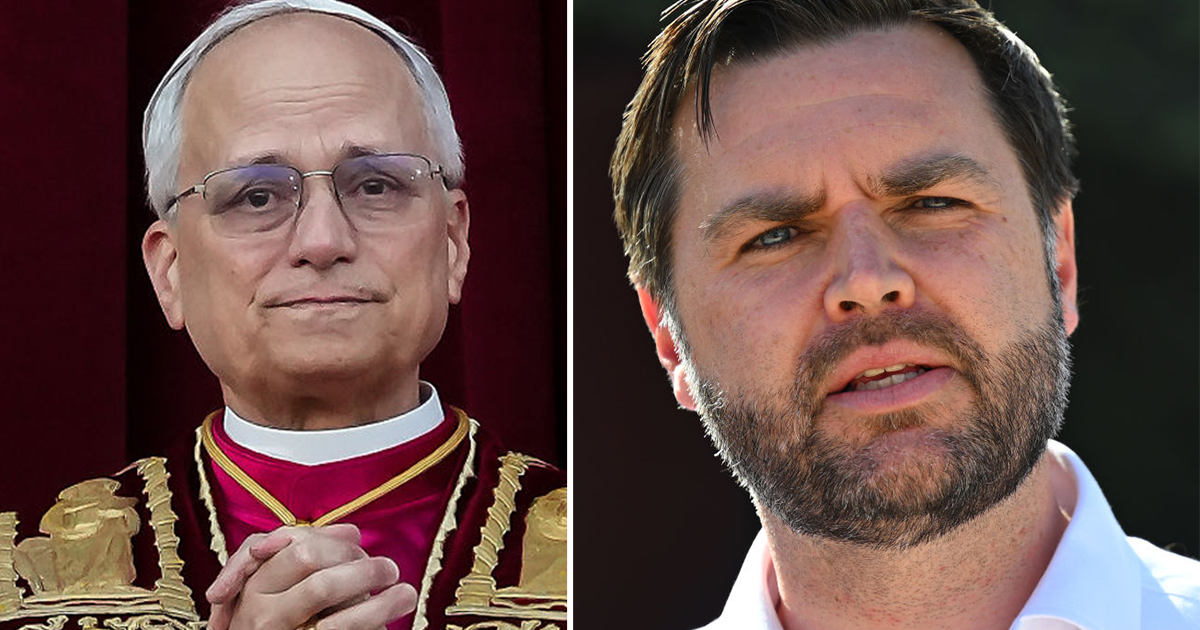
On May 8, 2025, Cardinal Robert Francis Prevost of Chicago was elected as the 266th pope of the Roman Catholic Church, assuming the name Pope Leo XIV. As the first American to hold the papacy, his election marked a milestone for the global Catholic community. With over 1.3 billion faithful worldwide, Pope Leo XIV now leads the Church at a time of significant spiritual, cultural, and geopolitical change.
American leaders across the political spectrum responded with congratulatory messages. Former President Donald Trump and Vice President JD Vance publicly praised the election, calling it a proud moment for the United States and American Catholics.

Faith Above Politics: Reaffirming Church Values
Pope Leo XIV’s theological and pastoral focus has long been grounded in Catholic social teaching—emphasizing care for the vulnerable, the dignity of all people, and moral clarity in public life. Prior to his papal election, Cardinal Prevost occasionally shared commentary from respected Catholic publications addressing social issues through a faith-based lens.
In February 2025, a verified account associated with Cardinal Prevost reposted an op-ed from the National Catholic Reporter critiquing a public statement by Senator JD Vance. Vance had discussed a framework for prioritizing care based on familial and national proximity. The reposted article responded with a theological reflection, emphasizing that Catholic teaching encourages universal love rather than ranking human worth by geography or citizenship.
This gesture was not intended as political criticism, but as a clarification of core Church doctrine: that compassion, justice, and moral duty extend to all people equally. The Catechism of the Catholic Church supports this universal outlook, asserting the obligation of Catholics to promote the common good beyond political affiliation

Social Media and Catholic Ethical Discourse
Leading up to his election, Cardinal Prevost also reshared content from Catholic ethicists and bishops urging compassion in immigration and social justice discussions. A post from Bishop Evelio Menjivar, cited in Catholic Standard, asked Catholics to reflect on how faith calls them to uphold the dignity of immigrants and the marginalized.
These digital engagements reflected Cardinal Prevost’s emphasis on mercy, consistent with the pastoral approach modeled by Pope Francis. Rather than engaging in partisan debate, Pope Leo XIV’s record suggests a commitment to applying Catholic teachings thoughtfully within modern society.

Public Reaction and Church Unity
While Pope Leo XIV’s support for global solidarity has sparked dialogue in political and religious circles, Church leaders have reiterated that his election is a spiritual—not political—appointment. Cardinal Timothy Dolan and Bishop Robert McElroy emphasized that Pope Leo’s leadership will focus on unifying Catholics through Gospel-centered service and renewal.
“This is a historic moment for American Catholics,” said Cardinal Dolan. “But it’s also a call to remember that the Church is universal. Pope Leo brings humility and clarity to this role.”

Conclusion: Shepherding in a Divided World
As Pope Leo XIV begins his papacy, he steps into a role that transcends national identity or political affiliation. His early reflections on social responsibility highlight a continued commitment to values that define the Catholic faith: compassion, justice, inclusion, and peace.
Whether addressing theological nuance or broader humanitarian issues, Pope Leo XIV’s leadership invites Catholics to rise above division and anchor their witness in love, faith, and truth.
- Vatican News: https://www.vaticannews.va
- National Catholic Reporter: https://www.ncronline.org
- Catholic Standard: https://cathstan.org
- Catechism of the Catholic Church: https://www.vatican.va/archive/ccc_css/archive/catechism/p3s1c2a3.htm
- USCCB: https://www.usccb.org