
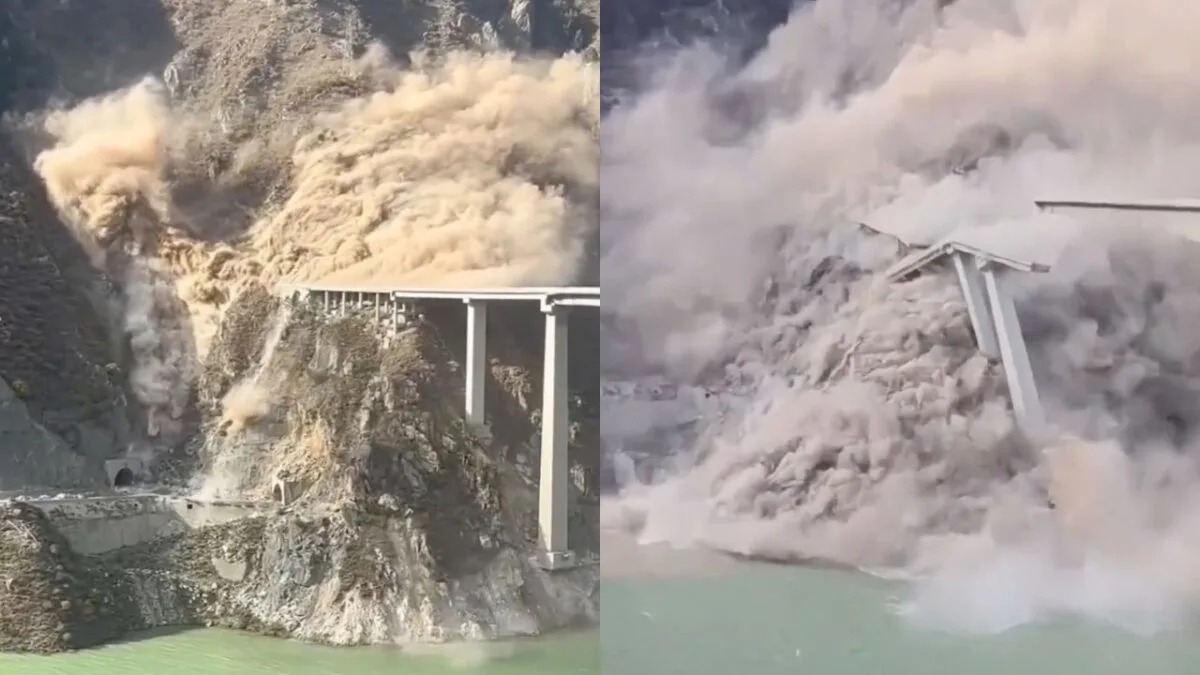
A bridge located near a hydropower facility in southwest China experienced a structural failure on Tuesday afternoon, only months after opening to traffic, according to information released by state media. Authorities confirmed that no injuries were recorded and that the site had been closed shortly before the incident due to signs of instability.
Early Warning Signs Detected Before the Collapse
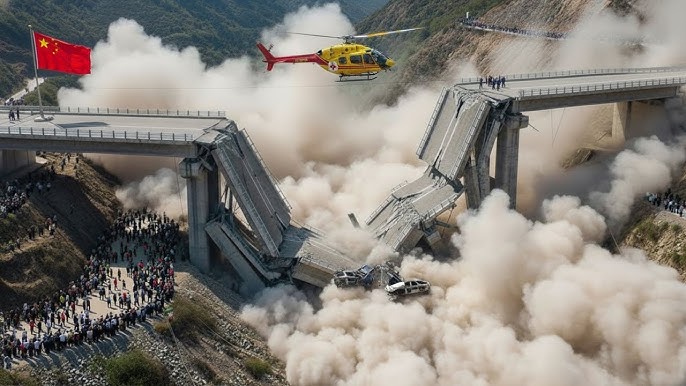
Officials in Barkam County told the Global Times that cracks and slight deformation were discovered on the bridge’s road surface and right-bank slope on Monday. These observations prompted transportation authorities to impose temporary traffic controls as a precaution.
By Tuesday afternoon, at around 3 p.m. local time, the bridge gave way, sending several concrete and steel components into the river below. Footage shared on Chinese social platforms showed the structure bending before sections detached, producing a cloud of dust over the gorge.
Although the video gained attention online, regional authorities emphasized that the bridge had already been closed to vehicles and pedestrians, preventing potential casualties.
Location and Structural Background

The bridge, known locally as the Hongqi Bridge, was located in the mountainous Maerkang region of Sichuan Province. It formed part of the G317 national highway, an important transport route linking central China with areas on the Tibetan Plateau.
Completed earlier in 2025, the bridge was built as a two-lane, cantilevered beam structure spanning approximately 758 meters. Its support piers—some rising more than 170 meters above the gorge floor—were designed to accommodate the deep valley terrain typical of Sichuan’s western highlands.
The project was carried out by the Sichuan Road & Bridge Group and was considered part of a broader effort to improve regional connectivity and support economic development across western China.
Government Response and Public Advisories

Following the detection of cracks, local transportation and public security departments issued a public notice warning of potential safety risks. The bridge was immediately closed to all forms of traffic.
The collapse occurred less than 24 hours after the initial warning signs appeared. According to China Central Television (CCTV), no vehicles or individuals were present on the structure when it failed. Local authorities moved quickly to secure the surrounding area and begin preliminary assessments.
State-run outlets have not yet released detailed findings regarding the cause, but early evaluations suggest that geological instability on one side of the bridge may have played a role. Southwestern China’s mountainous regions often pose engineering challenges due to shifting slopes and complex soil conditions.
Part of a Larger Infrastructure Program
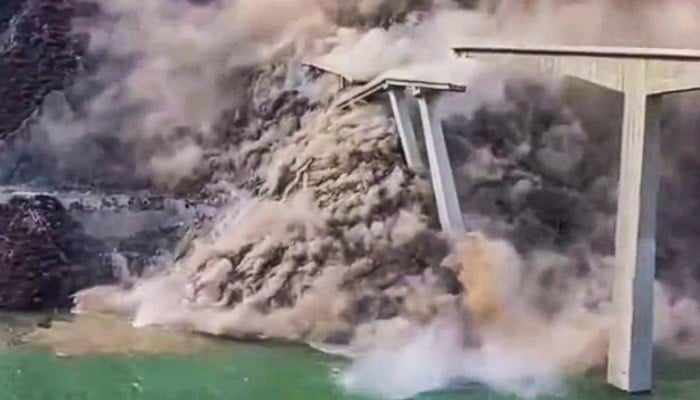
The Hongqi Bridge was among several infrastructure projects built in recent years as part of national development strategies aimed at improving transportation links across western provinces. The G317 route is particularly important for logistics, tourism, and access to remote communities.
Because the bridge had reopened to traffic only months earlier, the incident has drawn public interest and raised questions about long-term infrastructure monitoring in difficult terrain. While many similar projects in the region operate without issue, this case has underscored the need for continual evaluation of slope stability and structural integrity.
No Immediate Safety Threat to Surrounding Areas
Authorities reported that the collapse did not pose a direct threat to nearby communities or the hydropower station situated downstream. Environmental and safety teams were sent to assess water flow, slope conditions, and any potential secondary impacts. As of the latest updates, no additional hazards have been identified.
Traffic is currently being redirected to alternate routes while engineers and inspectors review the site. Officials have not provided a timeline for restoration or announced plans for rebuilding.
Investigation Underway
A formal investigation is now in progress to determine the specific factors that led to the collapse. Such reviews typically involve examining construction records, geological assessments, on-site conditions, and the bridge’s short operational history.
While preliminary assessments point to natural terrain conditions as a possible contributor, officials have emphasized that conclusions will be based on technical analysis. Updates will be released once the investigation is complete.
Reuters contributed information to this report.