
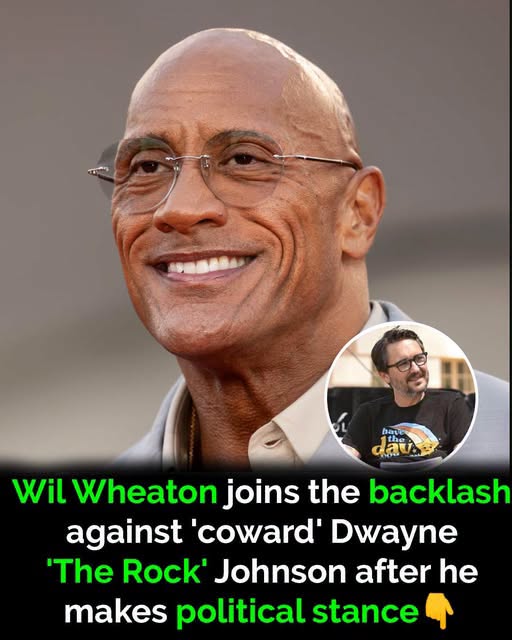
Imagine a crowded theater where the curtain rises not on a dramatic performance, but on a sudden, heated argument between two audience members. One side demands that the lead actor step forward to settle the dispute, believing a person of such massive public stature has a moral duty to lead. The other side insists the actor should simply stick to the script, arguing that the stage is a sanctuary designed for art, not ideology. This exact dynamic played out in the global arena when Hollywood megastar Dwayne “The Rock” Johnson announced his permanent departure from the theater of public political commentary.
For decades, the public arena has treated celebrity endorsements as highly prized currency. When a global icon speaks, millions listen, transforming artistic fame into significant social influence. However, as the cultural landscape undergoes a profound transformation, the long-standing belief that public figures must use their platforms for political advocacy is facing unprecedented scrutiny. The intense public reaction to Johnson’s decision highlights a fundamental question: Is remaining quiet during tense cultural moments a mature effort to reduce division, or is it an avoidant step back from social responsibility?
The Catalyst of a Modern Cultural Debate
The discussion surrounding celebrity neutrality reached a turning point following a candid magazine interview where Dwayne Johnson clarified his modern philosophy on public advocacy. Having historically stepped into political discussions, notably endorsing the Democratic ticket in the 2020 United States presidential election, the actor announced a complete reversal of his public approach. Johnson expressed a deep exhaustion with the increasingly hostile state of public discourse, noting that his previous transparency had inadvertently contributed to social friction rather than harmony.
The reaction from the entertainment community was immediate and deeply divided. Notable figures, including actors Wil Wheaton and George Takei, publicly expressed disappointment, suggesting that choosing to withhold one’s opinion when holding immense influence could be interpreted as a form of compliance with prevailing social issues. Conversely, a substantial portion of the public rushed to defend his decision, arguing that forcing creative professionals into political categories diminishes the unifying power of art and storytelling.
The Cultural Roots of the Public Figure Expectation
To fully understand why a celebrity’s choice to remain neutral sparks such intense debate, one must examine the deep cultural traditions surrounding the concept of the public voice. Throughout history, societies have frequently looked to their most visible and celebrated figures—from the poets of ancient civilizations to the musicians of the mid-twentieth century—to act as cultural guides. In many traditions, those who receive the favor of public attention are believed to owe a cultural debt to the community, utilizing their prominence to advocate for perceived collective truths.
This perspective views a massive social media following or a global cinematic presence not merely as a commercial tool, but as a significant social trust. From this viewpoint, neutrality is rarely seen as an objective stance. Instead, critics suggest that stepping away from difficult conversations is a luxury available only to those who are completely insulated from everyday societal challenges. When an icon chooses silence, it can be interpreted by passionate communities as a failure to support the very public that granted them their stature.
The Empirical Reality of the Endorsement Backfire
While cultural tradition often demands that public figures speak out, modern social science and communication research offer a much more cautious perspective on the actual effectiveness of celebrity interventions. Sociological studies tracking consumer behavior and voter sentiment indicate that high-profile endorsements frequently produce a psychological phenomenon known as the boomerang effect. When an individual feels pressured by a distant, wealthy figure to adopt a specific stance, they often double down on their original beliefs as a way to assert personal independence.
Furthermore, empirical data suggests that celebrity political pronouncements rarely alter long-term public perspectives. Instead of changing minds, high-profile stances tend to alienate large segments of an existing audience while intensifying the polarization of the remaining base. For global figures whose professional goal is to create broadly accessible entertainment, alienating substantial portions of the population presents a major logistical and commercial challenge. The scientific consensus on communication dynamics suggests that mass media messages are most unifying when they focus on shared human experiences rather than polarizing topics.
The Re-emergence of Art as a Neutral Sanctuary
In his public explanation, Johnson emphasized a desire to focus entirely on storytelling, framing creative expression as his primary passion. This philosophy aligns closely with classic literary and artistic theories which argue that the truest purpose of art is to provide a universal space where people of all backgrounds can find common ground. When a creative project becomes overtly tied to a specific contemporary debate, it risks losing its timeless quality, transforming from an open narrative into a specific message.
By retreating to the realm of pure entertainment, a public figure can arguably perform a different, yet equally vital, social service. In a highly fragmented world, spaces that offer shared laughter, collective wonder, or simple escape become increasingly rare. Maintaining a neutral public profile allows an artist’s work to remain accessible to everyone, ensuring that the theater, the cinema, and the digital screen continue to serve as places where diverse groups can gather without friction.
Reflections on Human Curiosity and Connection
Ultimately, the global conversation surrounding celebrity neutrality is not truly about Hollywood personalities or media strategies. Instead, it serves as a clear reflection of a fundamental human desire for connection, validation, and clarity in a complex world. Humans are naturally curious creators of community, always searching for shared signals and guiding voices to help navigate the collective challenges of modern life. When we look to public figures for guidance, we are often looking for reassurance that our shared values still hold weight.
As the boundaries between entertainment, media, and personal philosophy continue to shift, the path forward may require a deeper appreciation for different types of social contributions. Voices that passionately champion specific causes will always have a vital place in the public square, driving awareness and inspiring action. At the same time, there is a quiet validity in the choice to build broad bridges through art, providing neutral spaces that remind us of our shared humanity despite our differences. True social balance relies on both perspectives: those who urge us to confront our disagreements directly, and those who remind us of the peaceful spaces where we can simply stand together.
Sources
-
The Guardian: Reports on high-profile entertainment figures and the evolving landscape of public endorsements.
-
The Hollywood Reporter: Analyses of media trends, audience demographics, and the commercial impact of celebrity public relations.
-
Journal of Communication: Peer-reviewed research articles detailing the empirical effects of high-profile advocacy on public polarization and consumer trust.
-
Esquire Magazine: Comprehensive profiles and long-form interviews detailing modern perspectives on the creative industries.