

Overview of the Minneapolis Sh00ting
On January 7, 2026, a fatal shooting involving a federal immigration agent and a Minnesota resident drew widespread attention and raised serious questions about law enforcement use of force in the United States. The incident occurred in south Minneapolis when Donald Trump-era immigration enforcement actions had brought a large contingent of federal agents into the city, including officers from U.S. Immigration and Customs Enforcement (ICE) and other agencies. During this operation, 37-year-old Renee Nicole Good, an American mother of three, was shot and killed by an ICE agent named Jonathan Ross. The encounter and its aftermath have prompted investigation, political debate, protests, and legal scrutiny across the country.
The case has become a flashpoint in discussions about federal policing practices, transparency, and community trust. Officials have presented conflicting narratives about what occurred in the moments leading up to the shooting, and the release of video from the incident has further complicated public understanding of the event. (NBC Chicago)
Who Was Renee Good?
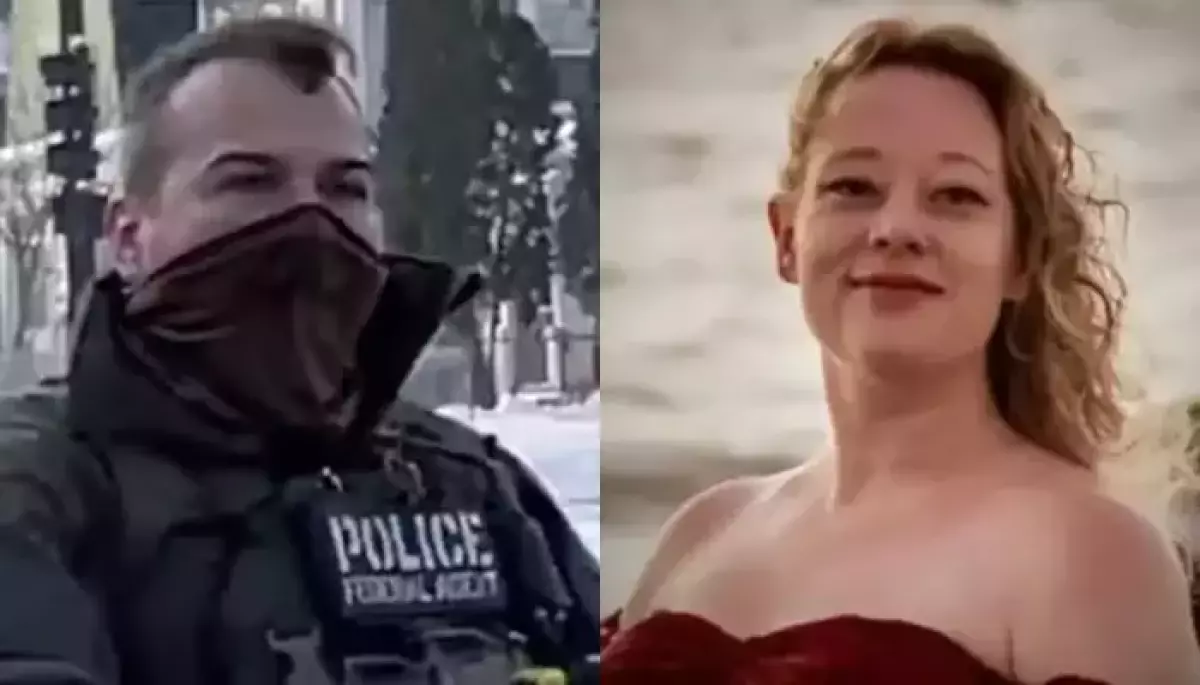
Renee Nicole Good was a 37-year-old American woman, described by family, friends, and local reports as a poet, mother, and community member. She had recently moved to Minneapolis with her family and was actively involved in local events. According to her wife, Becca Good, Renee was a person known for her kindness and compassion. Becca released a statement after her wife’s death reflecting on that character and the tragedy of losing her. (Them)
Good was in her vehicle on East 34th Street and Portland Avenue when federal immigration officers approached her during an enforcement action. Several videos from different perspectives — including footage apparently recorded on the ICE agent’s phone — show Good sitting in the driver’s seat with a dog visible in the rear of the vehicle shortly before the shooting. In one of the clips, she can be heard telling the officer she was not angry. (NBC Chicago)
Who Is Jonathan Ross?
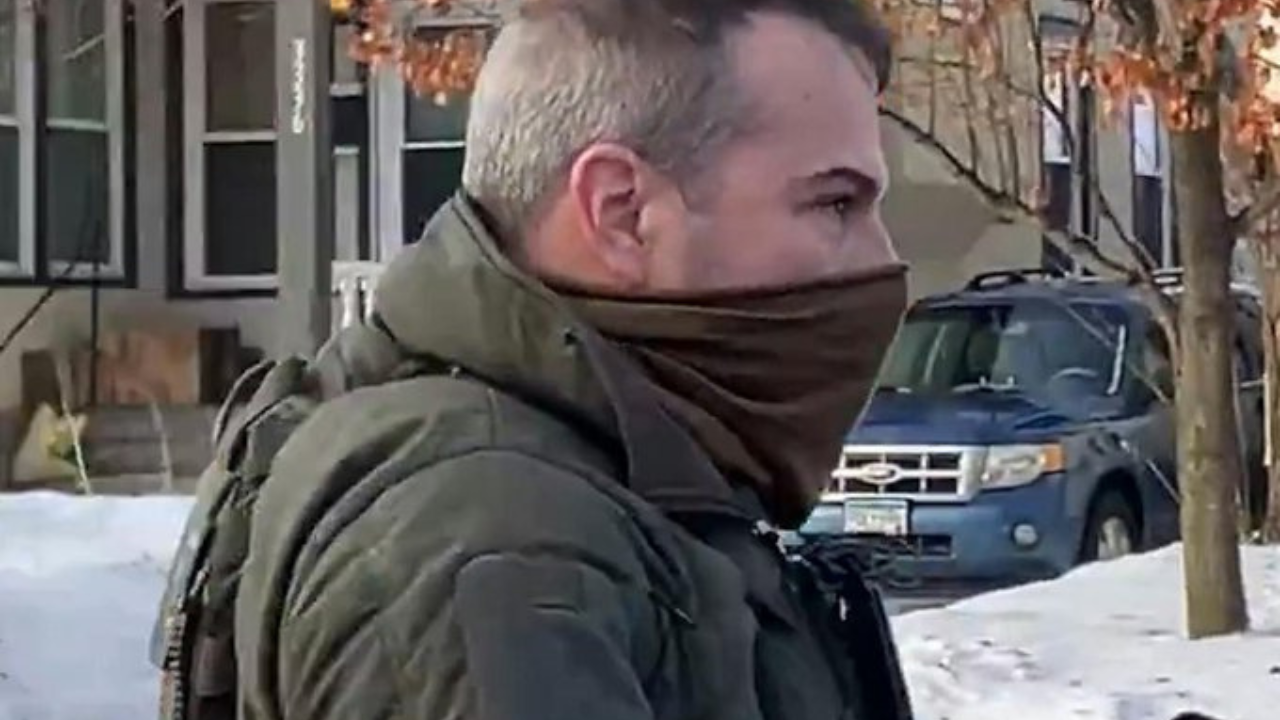
The ICE agent involved in the shooting was later identified by local media and public records as Jonathan Ross. He is a longtime federal law enforcement officer with nearly two decades of experience. Ross served in the military, including time in the Indiana National Guard and deployment during the Iraq War. He later worked for the U.S. Border Patrol before joining ICE’s Enforcement and Removal Operations unit. Within ICE, Ross was part of special response teams and had roles as a firearms instructor and field intelligence officer. (WBUR)
Ross was previously injured during an enforcement encounter in June 2025, when documents indicate he was dragged by a fleeing vehicle after confronting a suspect. This earlier incident was referenced by federal officials in statements following the January 2026 shooting. (Hindustan Times)
The Final Moments Before the Shooting

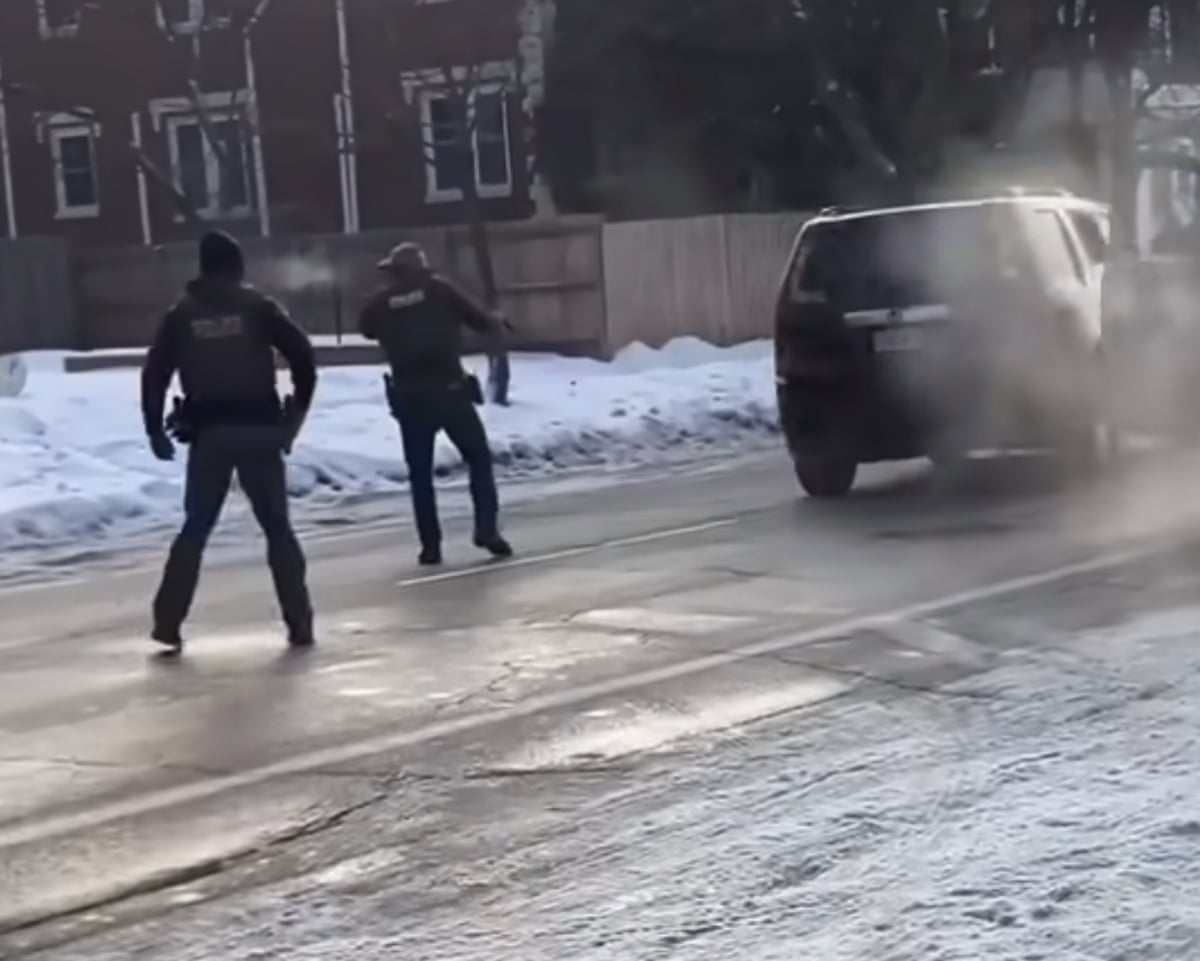
Multiple video recordings have surfaced showing the moments before the shooting. One 47-second clip, widely circulated online, shows Ross approaching Good’s vehicle and walking around it while the SUV remains stopped in the street. The footage captures interactions between Good and officers and, in some versions, includes audio of conversations and commands being given, as well as a brief exchange involving Good and her wife. (Star Tribune)
According to these recordings, Renee Good’s SUV began moving as officers were nearby. Ross fired three shots into her vehicle in rapid succession. The SUV continued moving a short distance before crashing into another vehicle and a pole; Good was pronounced dead at the scene. (Wikipedia)
The interpretation of this sequence has been strongly contested. Federal officials have framed the shooting as an act of self-defense, claiming that Good’s vehicle threatened officers. In contrast, some experts and community leaders argue that the available footage does not clearly show an imminent threat that justified lethal force. (AP News)
Official Statements and Conflicting Narratives
In the wake of the shooting, top federal officials defended the actions of the ICE agent. Homeland Security Secretary Kristi Noem and Vice President J.D. Vance both issued statements asserting that the agent believed his life or the lives of others were at risk when he discharged his weapon. They cited Good’s movement of the vehicle as a critical factor in their assessment. (Hindustan Times)
President Trump also commented publicly, describing the situation as tragic but framing the agent’s actions as appropriate given the circumstances. These statements reflected the administration’s broader stance on immigration enforcement and the need to support federal officers performing difficult duties under intense conditions.
Local leaders expressed a very different view. Minneapolis Mayor Jacob Frey and Minnesota Governor Tim Walz strongly criticized the federal response, with Frey calling for a reduction in ICE presence in the city and describing the incident as deeply troubling. State officials also raised concerns about civil liberties and the escalation of force. (The Guardian)
Legal and Investigative Developments
The fatal shooting is under investigation, and the Federal Bureau of Investigation (FBI) has taken the lead, restricting local law enforcement access to certain evidence and formal inquiry materials. This decision has drawn criticism from Minnesota officials, who argue that state agencies should be involved to ensure fairness and transparency. (The Guardian)
Legal experts note that authorizing DNA tests, subpoenas, or charging decisions in such cases typically requires clear evidence and procedural justification. Decisions made in this case will likely be watched closely, as they could set precedents for future encounters involving federal agents and civilians. The tension over jurisdiction reflects broader debates about federal authority versus state and local oversight in law enforcement matters. (The Week)
Public Reaction and Protests
The shooting sparked protests and vigils in Minneapolis and other cities across the United States. Many demonstrators called for accountability and a review of immigration enforcement tactics, while some advocacy groups linked the incident to a pattern of aggressive federal operations under the current administration. Others contended that the use of force appeared inconsistent with accepted law enforcement practices, citing legal standards and expert commentary on the handling of moving vehicles during encounters.
Crowdfunding efforts related to the incident also emerged, with campaigns established for both the Good family and for supporting the ICE agent involved. In some cases, platforms have reviewed fundraisers for compliance with their terms of service, illustrating how public responses have spanned a wide range of opinions and motivations.
Broader Context of Immigration Enforcement
This incident has unfolded against the backdrop of a larger federal push to expand immigration enforcement operations in the United States. Critics of the expanded deployment of ICE agents argue that it has led to heightened tensions, particularly in communities already wary of federal intervention. Supporters contend that robust enforcement is necessary to uphold immigration law and public safety.
The debate touches on policy questions about the limits of federal power, community policing strategies, and how to balance security with civil rights protections.
Looking Ahead
As investigations continue, key questions remain unanswered. The release of additional video, witness testimony, forensic analysis, and legal rulings will shape the public record and influence policy discussions. The tragic death of Renee Good has prompted reflection on how law enforcement engages with civilians, how federal and local authorities interact, and what accountability mechanisms are appropriate when deadly force is used.
For many observers, the incident underscores the complexity and sensitivity of enforcing immigration laws in diverse communities. The outcome of inquiries and any legal proceedings will likely have lasting implications for federal operations, local governance, and public trust in law enforcement.