
Nature has an incredible way of surprising us. Whether it’s the calming sound of leaves rustling in the wind, the sight of a bird gliding across a blue sky, or the earthy smell after rain, time outdoors often provides moments of peace and wonder. Sometimes, however, those wonders come with unexpected twists.
This was exactly what happened to an Australian woman named Kym Beechey, an avid walker and amateur photographer. What she thought was a joyful encounter with a baby bird turned out to be something very different — and the discovery not only amused her but also taught her a fascinating lesson about how nature plays with perception.
A Peaceful Walk Turns into a Curious Encounter
Like many people, Beechey enjoys taking time away from city life to walk in natural settings. Scientific studies have long shown that outdoor activities help reduce stress, improve mood, and restore focus. For Beechey, the added joy comes from carrying a camera and capturing unique natural moments along the way.
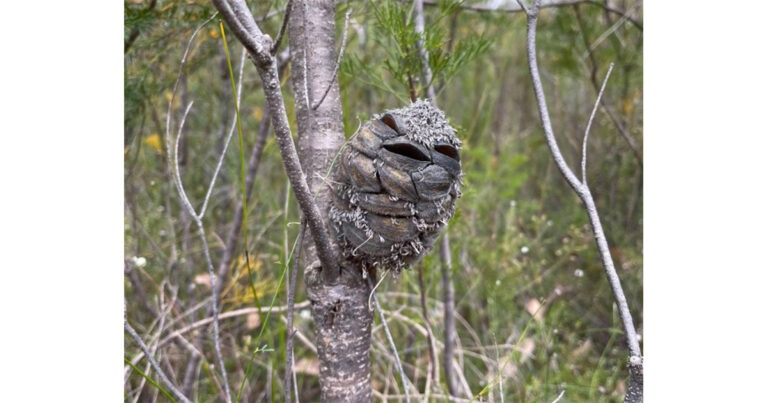
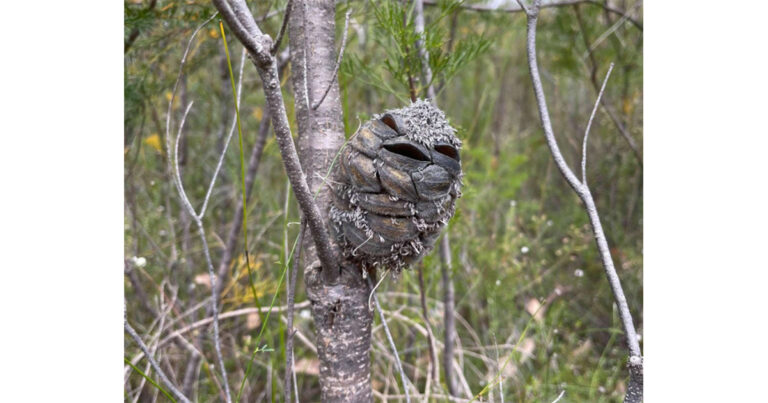
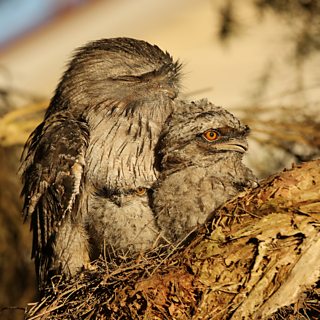
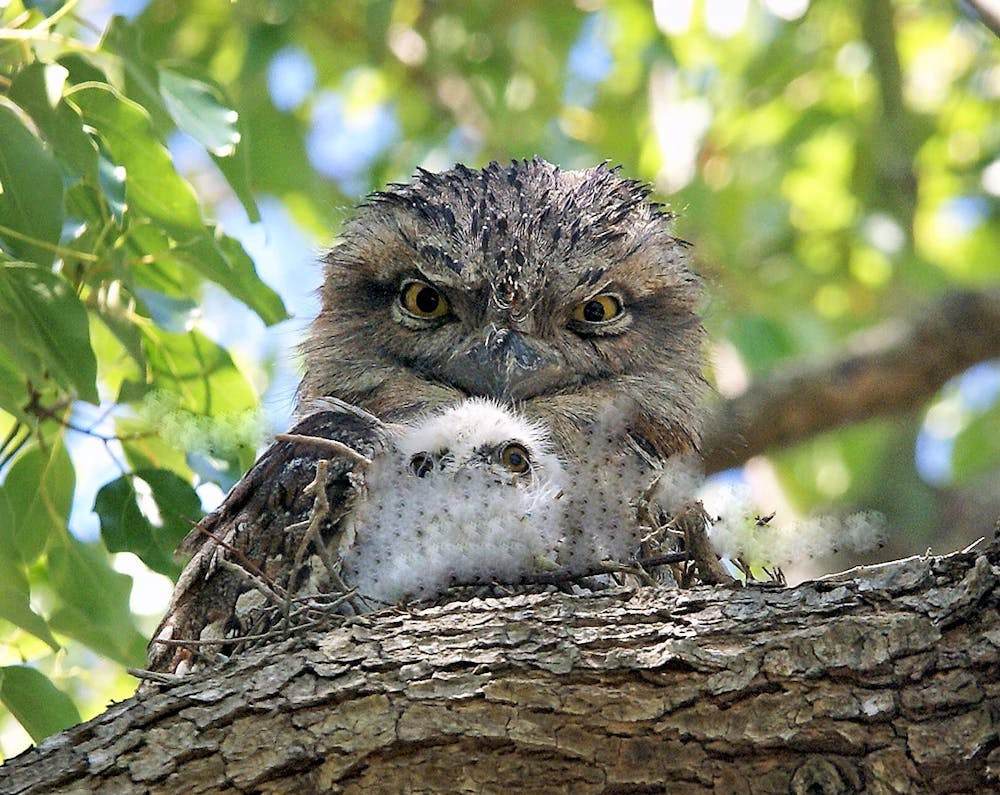
On one of her walks, she spotted what she believed was a baby tawny frogmouth — a nocturnal bird native to Australia that resembles an owl. From her perspective, it seemed like the little bird was perched quietly, wearing what looked like a faint smile. Excited by the discovery, she reached for her phone to take a picture, hoping to capture the rare and adorable sight.
But as she leaned in for a closer look, the illusion shattered.
Not a Baby Bird — A Banksia Pod
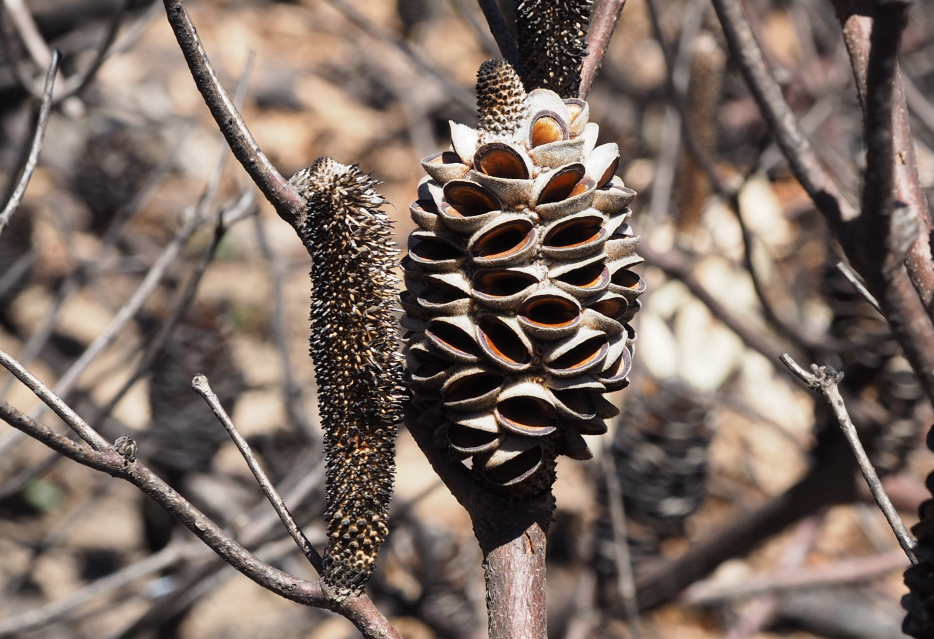
What Beechey thought was a bird was actually a banksia pod, the seed-bearing structure of the banksia tree. These pods have an unusual, sometimes comical appearance that can resemble faces, animals, or other familiar shapes. In this case, the pod’s curved openings mimicked a beak and eyes, creating the illusion of a smiling chick.
Rather than disappointment, Beechey’s realization brought laughter. She had discovered not a fragile baby bird, but an amusing quirk of the natural world. The photograph she captured became a lighthearted addition to her collection — proof that nature often offers surprises when least expected.
The Fascinating World of Banksia Trees
To understand Beechey’s mix-up, it helps to know more about the banksia tree. Belonging to the Proteaceae family, these trees and shrubs are native to Australia, though some species also grow in Papua New Guinea and New Zealand.
Key facts about banksia trees include:
-
Unique Appearance: Their seed pods often resemble woody cones but are not true conifers. Each pod contains multiple seed chambers that open to release seeds.
-
Adaptation to Fire: Banksia pods are known for their resilience. Many species rely on bushfires to open and release seeds, ensuring survival in fire-prone landscapes.
-
Cultural Importance: Banksias have long been featured in Australian literature, art, and even children’s stories. The quirky appearance of their pods has captured imaginations for generations.
Because of their odd shapes, banksia pods are often compared to faces or creatures. Some people see them as funny or endearing, while others might find them eerie. For Beechey, the resemblance to a smiling baby bird was strong enough to fool her camera lens.

Why We See Faces in Nature: The Science of Pareidolia
Beechey’s story also highlights a fascinating psychological phenomenon called pareidolia — the human tendency to perceive familiar patterns, especially faces, in random objects.
-
Everyday Examples: People often see faces in clouds, animals in rock formations, or shapes in tree bark.
-
Evolutionary Explanation: Scientists believe pareidolia developed as a survival mechanism. Recognizing faces quickly would have been essential for early humans to identify friends, foes, or predators.
-
Modern Fun: Today, pareidolia is more a source of amusement and creativity. It explains why so many people share photos of “smiling cars” or “grumpy potatoes” online.
In Beechey’s case, her brain interpreted the banksia pod’s patterns as a living bird — proving how easily our senses can play tricks in the natural world.
Nature Photography: Finding Joy in the Unexpected
For amateur photographers like Beechey, encounters like this are part of the adventure. Unlike staged studio shots, nature photography requires patience, keen observation, and sometimes a sense of humor. Wildlife is often elusive, and moments can disappear in an instant.
Yet even when expectations don’t align with reality, the results can be rewarding. A mistaken “baby bird” photo becomes a conversation starter, a funny memory, and a reminder that nature’s surprises are not always what they seem.
The Global Appeal of Nature Walks
Beechey’s lighthearted discovery resonates beyond Australia because it reflects a universal truth: spending time in nature has the power to refresh the human spirit. From forest hikes in Europe to desert treks in the American Southwest, people everywhere seek refuge outdoors.
Benefits of regular time in nature include:
-
Reduced stress and anxiety
-
Improved focus and creativity
-
Stronger connection to the environment
-
Opportunities for exercise and social bonding
Stories like Beechey’s also encourage curiosity. For readers unfamiliar with banksia trees, her experience opens the door to learning about unique ecosystems in other parts of the world.
A Lesson in Wonder and Perspective
At first glance, Beechey’s story may seem like a simple mistake, but it carries a deeper message. Sometimes, what we think we see is shaped more by perception than reality. Instead of being disappointed, Beechey embraced the humor and wonder of the moment.
Her photo of a “smiling bird” that turned out to be a banksia pod is a gentle reminder to slow down, look closely, and appreciate the unexpected. Nature is full of illusions and surprises, and often, those surprises are what make the journey most memorable.
Conclusion
What began as a quiet walk for Kym Beechey became a delightful encounter with nature’s sense of humor. Mistaking a banksia pod for a baby tawny frogmouth might have fooled her at first, but it left her with a story worth sharing — and a photo that continues to spark smiles.
In the end, it doesn’t matter whether she photographed a rare bird or a quirky seed pod. What matters is the joy of discovery, the laughter in the unexpected, and the reminder that nature always has a way of surprising us when we take the time to notice.