
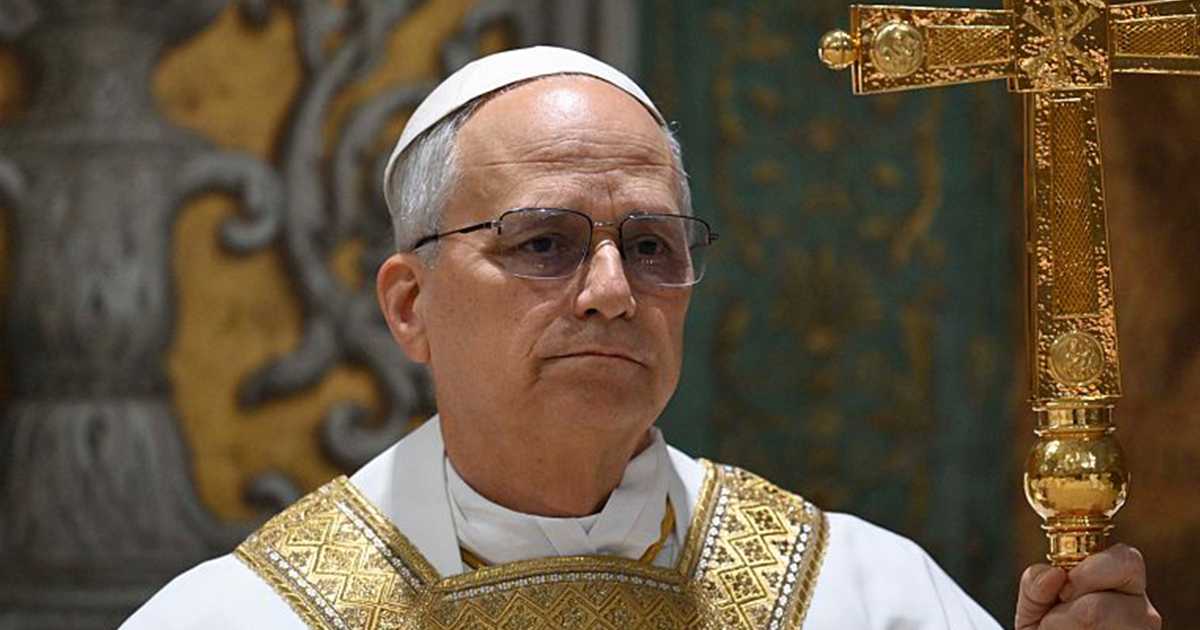
On May 8, 2025, Cardinal Robert Francis Prevost became Pope Leo XIV, marking a historic moment as the first American-born pontiff. His election sparked renewed curiosity about an old and widely debated text known as the “Prophecy of the Popes.” While the document has circulated for centuries, scholars and Church authorities agree it holds no official or theological weight.
Instead, Pope Leo XIV’s leadership is being recognized as a continuation of global outreach and inclusive reform—reflecting the Church’s modern priorities.
Who Is Pope Leo XIV?
Pope Leo XIV was born Robert Francis Prevost on September 14, 1955, in Chicago, Illinois, and has served the Catholic Church for decades in various pastoral and leadership roles. He holds dual citizenship in the United States and Peru, reflecting his deep connections across the Americas.
Before his elevation to the papacy, he served as:
- Bishop of Chiclayo, Peru (appointed in 2004),
- Prior General of the Order of St. Augustine (2001–2013),
- Prefect of the Dicastery for Bishops (from 2023),
- A member of the Congregation for Bishops and other Vatican bodies under Pope Francis.
His appointment reflects the Church’s increasing emphasis on global representation and inclusive leadership, with an emphasis on social justice, clerical formation, and unity across continents.

The Resurfacing of a Disputed Prophecy
Following Pope Leo XIV’s election, a wave of online interest resurfaced surrounding the so-called “Prophecy of the Popes,” a text purportedly attributed to St. Malachy, a 12th-century Irish archbishop. The document, which claims to predict a sequence of 112 popes leading to the final judgment, has circulated for centuries but is not recognized by the Catholic Church as authentic or doctrinal.
What Does the Prophecy Claim?
The “Prophecy of the Popes” is a list of 112 Latin phrases, each said to describe a future pope, beginning with Celestine II (elected in 1143). The final entry refers to a mysterious figure known as “Petrus Romanus” (Peter the Roman) who, according to the text, will lead the Church during a period of turmoil.
However, credible scholars such as Fr. James Weiss, a professor of Church History at Boston College, have long challenged the document’s origin. In interviews and academic commentary, Weiss noted:
“The prophecies are a forgery. I don’t believe there’s any credibility to them.”
Most historians agree that the document first surfaced in 1595, more than 400 years after St. Malachy’s death, and likely served political or ecclesiastical interests of that period. According to Weiss, descriptions for popes after the 16th century become increasingly vague or inconsistent, further eroding the credibility of the prophecy.

Why Pope Leo XIV Does Not Fit the Prophetic Mold
Some recent online theories have speculated about a possible link between Pope Leo XIV and “Peter the Roman.” However, these claims do not align with verifiable facts.
- Name: Pope Leo XIV was born Robert, not Peter.
- Nationality: He holds American and Peruvian citizenship, not Italian or Roman.
- Papal Name: He chose the name Leo, honoring past pontiffs with strong pastoral and doctrinal legacies, not “Peter.”
In an article from USA Today, religious commentator Josh Canning, Director of Campus Ministry at Toronto’s Newman Centre, dismissed the association between Pope Francis and “Peter the Roman” years earlier:
“I don’t know how you can connect Peter the Roman with Pope Francis.”
The same reasoning applies to Pope Leo XIV.

Scholarly Rebuttals to the Prophecy
Joëlle Rollo-Koster, a professor of medieval history at the University of Rhode Island, has also voiced skepticism regarding the prophecy’s authorship. Speaking to NCR Online, she emphasized the lack of evidence supporting the idea that St. Malachy ever wrote such predictions:
“As a historian, I am hardcore on the evidence, and that, for me, is the ultimate proof that Malachy did not utter or write prophecies.”
She also highlighted that no historical records from Malachy’s contemporaries mention such a prophetic text. The lack of references in early manuscripts strongly suggests that the document is a much later creation.
The Church’s Official View
The Catholic Church has never endorsed the “Prophecy of the Popes” as legitimate doctrine or prophecy. While it has been a topic of historical interest, it holds no place in magisterial teaching or official Vatican publications.
As noted by The Catholic Herald, the Church discourages the faithful from placing theological or eschatological significance on apocalyptic theories or texts that do not align with Scripture or Church tradition.
Instead, the Church encourages trust in divine providence, commitment to the Gospel, and focus on pastoral care, unity, and service—values that Pope Leo XIV has already prioritized in his early public addresses and homilies.

A Pope for a Global Church
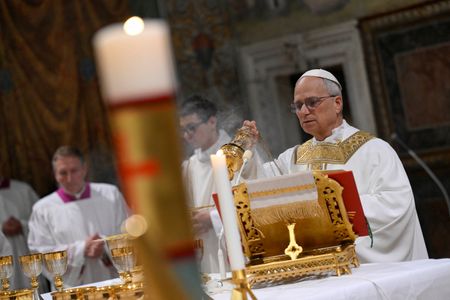
During his first public Mass as pope, held in the Sistine Chapel on May 9, 2025, Pope Leo XIV emphasized themes of mercy, renewal, and solidarity with the marginalized—a continuation of the legacy set by Pope Francis.
He is expected to carry forward the Vatican’s efforts in areas such as:
- Environmental stewardship, aligning with Laudato Si’,
- Clerical transparency and reform,
- Outreach to underserved communities in the Global South,
- And interfaith dialogue, especially in an increasingly pluralistic world.
:max_bytes(150000):strip_icc():focal(999x0:1001x2)/pope-leo-xiv-050825-7-6b6f0670707a4c79a60e4bbadb12150f.jpg)
Conclusion: Prophecy or Popular Myth?
While ancient texts and mystical prophecies often capture the imagination, especially during historic transitions like a papal election, there is no evidence or endorsement to suggest that Pope Leo XIV is the final pope, or that the “Prophecy of the Popes” carries any authoritative insight into the future of the Church.
As the first American pope, Leo XIV’s leadership symbolizes a Church that continues to grow in diversity and reach. His election stands not as a sign of finality, but as a moment of renewal and global representation.
Sources:
- Vatican News
- The Catholic Herald
- National Catholic Reporter
- BBC News – Pope Election Coverage
- USA Today – Catholic Church Commentary
- Boston College – Faculty Publications