
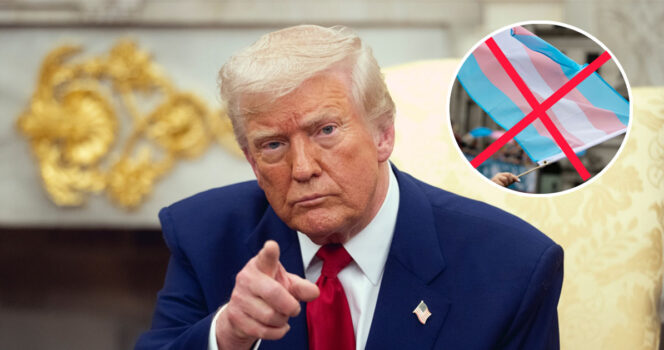
On May 6, 2025, the U.S. Supreme Court ruled that the federal government may enforce a policy originally introduced during Donald Trump’s presidency that restricts military service for individuals who identify as transgender. The decision permits the implementation of the policy while ongoing legal challenges continue to proceed through the courts.
This development has drawn national attention, with supporters of the policy citing military readiness, and critics arguing that it is discriminatory and violates constitutional protections.
Background: The Policy and Its Origins
In 2017, then-President Donald J. Trump announced via social media that the United States government would no longer allow individuals who identify as transgender to serve in the military. The administration later formalized this position through an executive memorandum and then via a policy memorandum titled “Military Service by Transgender Persons”, implemented in April 2019.
The policy bars individuals who have been diagnosed with gender dysphoria from serving in the military unless they serve in their biological sex. It also prohibits those who have undergone or are seeking gender transition procedures from enlisting. However, individuals who were already serving openly under the previous Obama-era policy before the new rule went into effect were allowed to continue.
Source: Department of Defense Policy, 2019

The Lawsuit: Legal Challenge by LGBTQ Advocates
The Trump-era policy was challenged in court by LGBTQ Legal Advocates & Defenders (GLAD) and the National Center for Lesbian Rights (NCLR). In their lawsuit, the organizations represent six active-duty transgender service members and two individuals who wish to enlist. They argue that the policy violates the Equal Protection Clause of the U.S. Constitution by discriminating against individuals based on their gender identity and transgender status.
In March 2025, U.S. District Judge Ana Reyes, based in Washington, D.C., issued a preliminary injunction blocking the enforcement of the policy, pending further court review. Judge Reyes stated in her decision that the policy “stigmatizes transgender persons as inherently unfit to serve” and “bears no relation to the realities of military service.”
Source: GLAD Official Statement, Reuters
Supreme Court Ruling: A Temporary Reversal
Despite the district court’s ruling, the Supreme Court on May 6, 2025, issued a temporary order allowing the policy to go into effect while the lawsuit continues. The unsigned opinion noted that the Court had not yet ruled on the merits of the case, but that enforcement of the policy would be permitted during litigation.
The three liberal justices—Sonia Sotomayor, Elena Kagan, and Ketanji Brown Jackson—dissented from the ruling, emphasizing that allowing enforcement could result in irreparable harm to those affected.
This decision mirrors a similar temporary action taken by the Supreme Court in 2019, when it also allowed the Trump administration to proceed with the policy pending the outcome of related litigation at that time.
Source: Supreme Court Docket and Ruling Summary, Associated Press

Arguments For the Policy
Supporters of the policy argue that it prioritizes military readiness, cohesion, and effectiveness. In documents submitted to the court, the government stated that the presence of individuals with gender dysphoria could require medical accommodations, affect unit stability, and increase military healthcare costs.
The Department of Defense also contends that the policy does not constitute a ban on all transgender individuals. Instead, it focuses on medical diagnosis and the requirements for those who seek to transition, which they argue are inconsistent with current military operational standards.
Source: U.S. Department of Defense 2025 Policy Justification
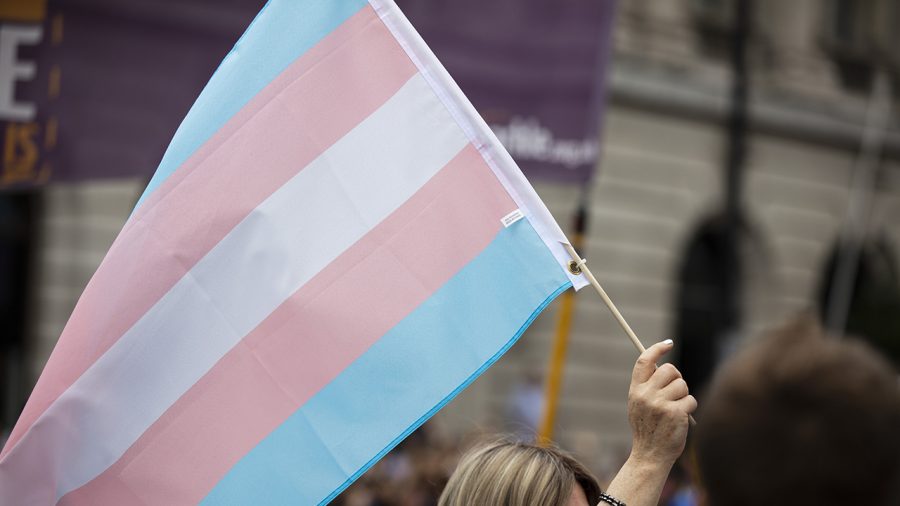
Response From LGBTQ Advocacy Organizations
Following the Supreme Court’s ruling, leading civil rights and LGBTQ advocacy groups expressed disappointment, asserting that the decision allows a discriminatory policy to remain in place temporarily.
The Human Rights Campaign Foundation and Lambda Legal issued a joint statement:
“By allowing this policy to take effect during ongoing litigation, the Court has enabled a measure that undermines equality and sends the message that transgender individuals are unfit to serve. We continue to stand with the brave transgender Americans who serve or seek to serve and will fight for this policy to be permanently overturned.”
These organizations maintain that transgender individuals meet the same rigorous standards as other service members and that their presence does not impair military performance.
Source: Human Rights Campaign, Lambda Legal

Public and Military Reaction
Public opinion on transgender military service has evolved over the years. According to a 2023 Pew Research Center survey, a majority of Americans (64%) support allowing transgender individuals to serve in the armed forces. Many veterans’ groups have also voiced support for inclusion and equal opportunity.
A number of transgender veterans and active-duty service members have shared their stories in the media, highlighting their commitment to service and their desire to be judged on performance—not gender identity.
Source: Pew Research Center, NPR
Ongoing Legal Proceedings
While the Supreme Court’s decision allows the policy to remain in effect temporarily, the underlying case remains active. Legal experts expect the challenge to proceed through appeals courts and potentially return to the Supreme Court for a final decision on the merits in the coming months or years.
The case presents critical questions about constitutional protections, including equal protection under the law and freedom from discrimination based on gender identity.
Source: ACLU – Trans Military Rights

Conclusion: A Developing Legal Battle
The May 2025 Supreme Court decision does not represent a final ruling on the legality of the Trump-era transgender military policy. Instead, it allows the federal government to enforce the policy during ongoing litigation. Advocates on both sides of the issue are preparing for a longer legal battle that could have far-reaching implications for civil rights, military policy, and federal executive authority.
As the legal challenge continues, advocacy groups, policymakers, and service members await a final resolution that will determine whether the policy stands—or is ultimately struck down in defense of equal treatment for all Americans who choose to serve their country.