
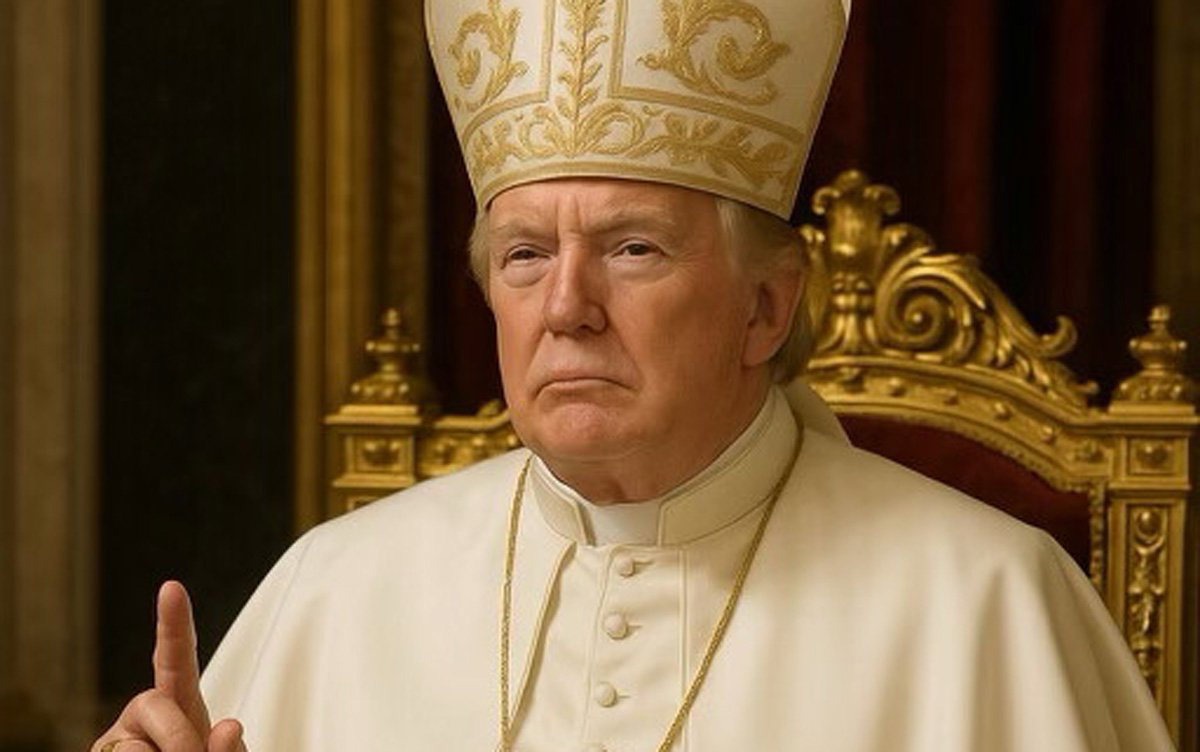
In the days following the funeral of Pope Francis, former U.S. President Donald Trump shared an AI-generated image of himself wearing traditional papal garments on his social media platform, Truth Social. The digitally altered image, posted as the Catholic Church prepared for the election of a new pope, has drawn public attention and prompted discussion regarding the respectful use of religious imagery, especially during times of mourning.
This article explores the context surrounding Trump’s post, the Church’s traditions, and the ethical considerations of AI-generated content in religious contexts.
The Passing of Pope Francis and the Vatican’s Period of Mourning
Pope Francis, who led the Roman Catholic Church from 2013 until his death in April 2025 at the age of 88, was recognized globally for his emphasis on compassion, interfaith cooperation, and social justice. His funeral took place on April 26, 2025, at St. Peter’s Basilica in Vatican City, drawing thousands of mourners and numerous international dignitaries.
The Vatican subsequently entered a traditional mourning period, during which the College of Cardinals convened a papal conclave to elect the next pope.
Source: Vatican News – Pope Francis Funeral Coverage

Trump Shares Digitally Altered Papal Image
Shortly after the funeral, Trump posted a digitally generated image showing himself in white papal vestments, including a mitre and a ceremonial cross. While the post did not contain explicit commentary or satire, the image drew widespread online attention due to its timing and religious symbolism.
AI-generated images featuring public figures have become more prevalent in recent years, often intended as humorous or stylistic expressions. However, the intersection of AI and sacred imagery—particularly when involving religious roles or figures—can provoke a strong emotional response among faith communities.
Source: Reuters – AI Images and Public Perception

Reactions from Faith Communities and the Public
Reactions to Trump’s post varied widely on social media. Some users expressed concern that the image, though digitally created, was shared during a period traditionally marked by solemnity and reflection within the Catholic Church. Others viewed the post as harmless or symbolic rather than disrespectful.
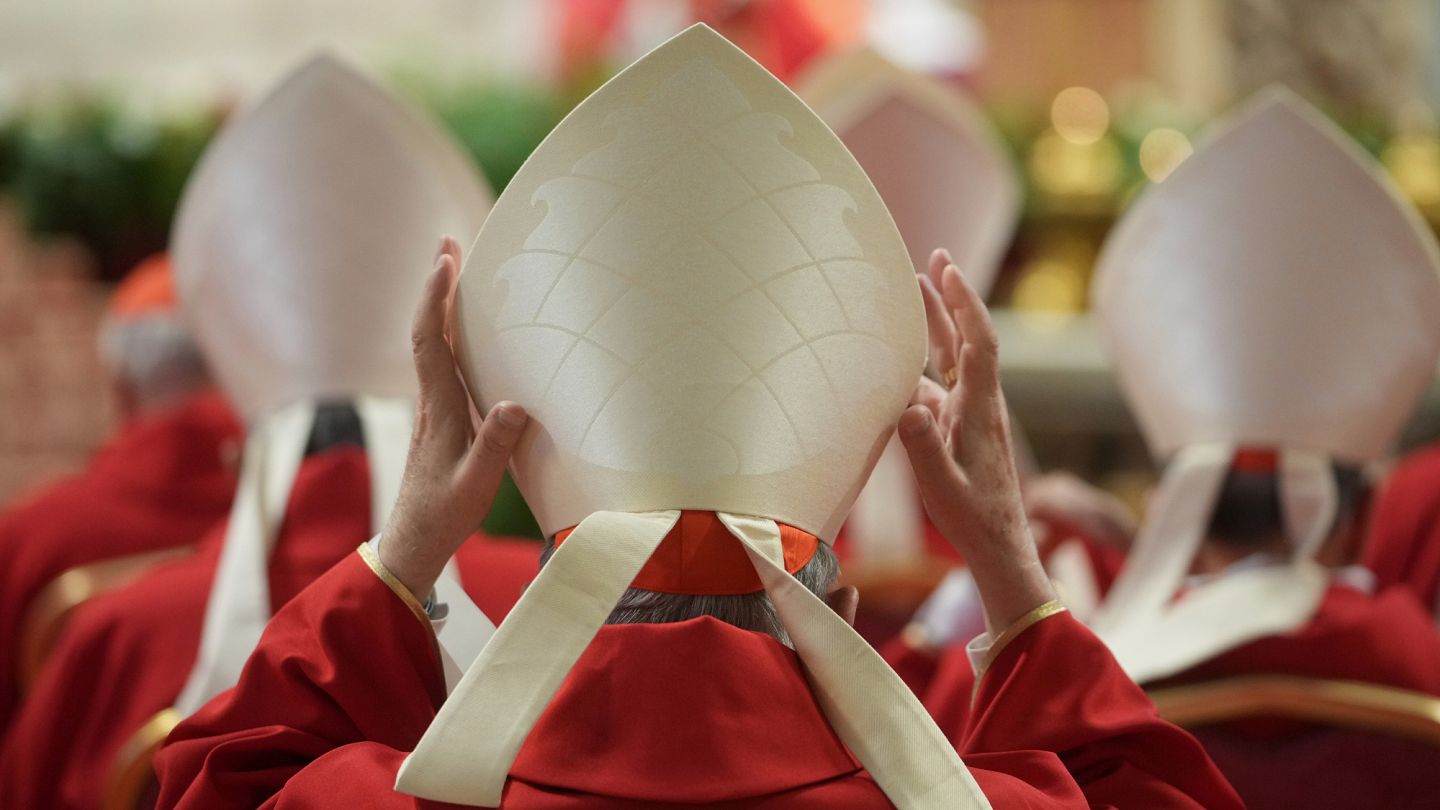
Catholic commentators highlighted the significance of papal attire, which is traditionally worn by ordained clergy and holds deep meaning within Catholic theology. While no official statement was issued by the Vatican or the United States Conference of Catholic Bishops (USCCB), some members of the Catholic community emphasized the importance of preserving the sanctity of religious symbols, especially during a time of transition.
Source: Catholic News Service – Commentary on Religious Imagery

The Papal Role and Its Significance
The pope serves as the Bishop of Rome and the spiritual leader of over 1.3 billion Catholics worldwide. According to Canon Law, only a baptized male member of the Catholic Church is eligible to be elected pope, and all recent popes have previously served as cardinals.
Religious scholars note that while digital representations may be intended as creative or humorous, their reception often depends on context—particularly when tied to sacred offices or rituals.
Source: Catechism of the Catholic Church – Papal Office
AI and Ethics in Religious Representation
The emergence of AI tools capable of producing realistic images has raised broader concerns about the ethical use of technology in religious, political, and cultural contexts. According to the Center for Humane Technology, it is essential to consider not only the creator’s intent but also the potential impact on audiences—especially when the content involves deeply held beliefs.
This instance involving Trump reflects a growing tension between digital creativity and traditional sensibilities. While the image may not have been designed to offend, its release amid a major religious transition naturally invited scrutiny.
Source: Center for Humane Technology – AI and Ethical Expression
Previous Comments and Public Persona
Donald Trump has previously made light-hearted remarks about religious figures. For example, during his presidency, he jokingly referred to the papacy as “an incredible job” in a 2020 interview. While such comments were not intended as policy or formal aspirations, they have contributed to a pattern of public statements that are occasionally interpreted in a variety of ways.
Source: Politico – Trump’s Remarks on Religious Roles
The Papal Conclave: Choosing a Successor
As of early May 2025, the College of Cardinals has gathered in the Sistine Chapel to select the next pope through a secret ballot process. A two-thirds majority is required for election, and the outcome is signaled by smoke emerging from the chapel chimney—white indicating a successful selection, black indicating no consensus.
Speculation about potential candidates continues among Vatican observers, though formal campaigning is strictly prohibited within the conclave itself.
Source: BBC – How Popes Are Elected
Conclusion: The Need for Sensitivity and Context in Public Expression
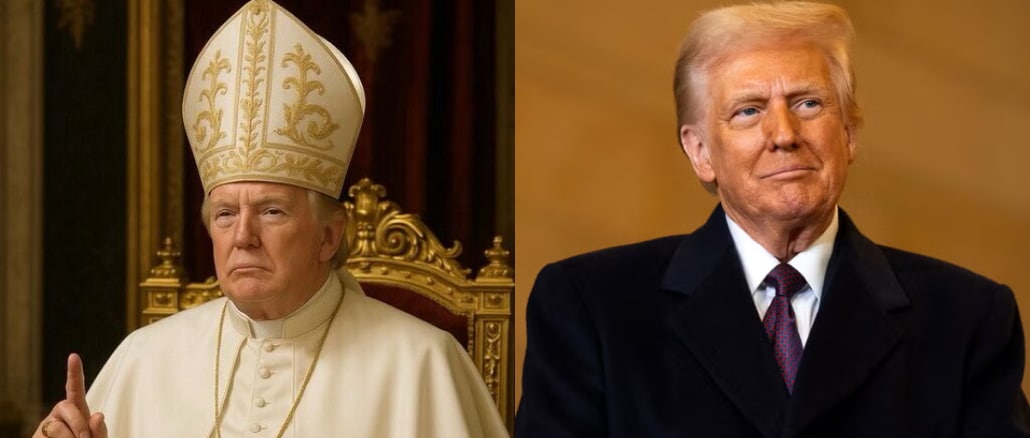
Trump’s AI-generated image of himself in papal garments has become a focal point for conversations about digital expression, religious respect, and cultural timing. While no official rebuke has been issued, the incident underscores the importance of being mindful about the context and symbolism of religious imagery—especially during significant transitions such as the passing of a global religious leader.
As artificial intelligence continues to shape online content, the need for empathy, nuance, and cultural awareness becomes ever more essential in public discourse.
Sources
- Vatican News – Pope Francis Funeral Coverage
- Reuters – AI Images and Public Discourse
- Catholic News Service – AI in Religious Contexts
- Catechism of the Catholic Church – Papal Office
- BBC – Papal Election Process
- Center for Humane Technology – AI Ethics
- Politico – Trump and Religion