
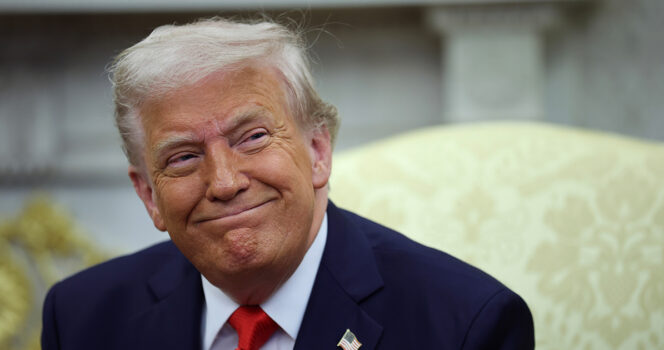
Former President Donald Trump has once again stirred controversy, this time by offering “Trump 2028” merchandise through his official website. The move has reignited debates over the limits of presidential terms as outlined in the U.S. Constitution and raised concerns among constitutional scholars and political observers. This article explores the legal framework surrounding presidential terms, the implications of Trump’s latest merchandise release, and the broader public reaction.
The U.S. Constitution and Presidential Term Limits
The 22nd Amendment to the U.S. Constitution, ratified in 1951, clearly sets the limit for presidential terms. According to the amendment:
“No person shall be elected to the office of the President more than twice, and no person who has held the office of President, or acted as President, for more than two years of a term to which some other person was elected President shall be elected to the office of the President more than once.”
(Source: National Archives, 22nd Amendment link)
In simple terms, an individual may serve as president for two elected terms, totaling a maximum of eight years. If someone serves more than two years of another president’s term, they are eligible to be elected to only one additional term.
Donald Trump served one full term as president from 2017 to 2021. He is currently seeking a second non-consecutive term in the 2024 presidential election, which is allowed under the 22nd Amendment, as it does not require the terms to be consecutive. However, any suggestion of running again in 2028 after a hypothetical second term would directly conflict with constitutional restrictions.

The “Trump 2028” Merchandise
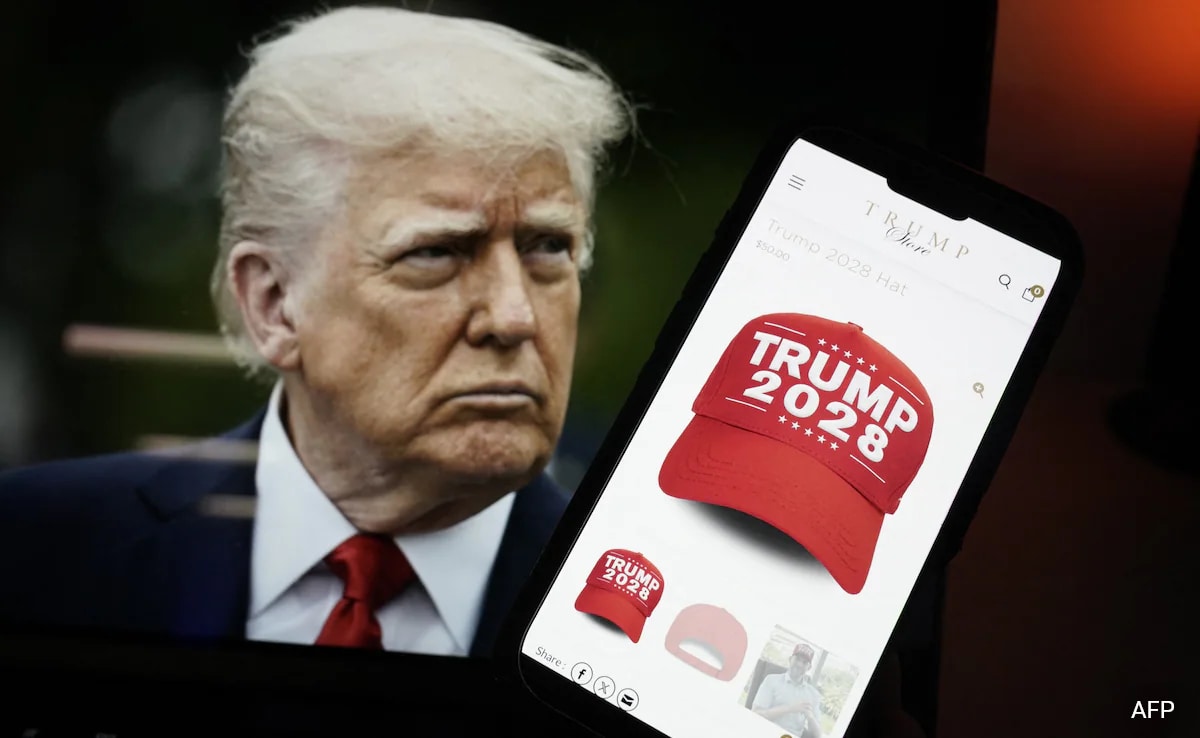
Amid this constitutional context, Trump’s official campaign store has begun selling “Trump 2028” hats and T-shirts. The merchandise is described on the website as follows:
“The future looks bright! Rewrite the rules with the Trump 2028 high crown hat. Fully embroidered with a snap closure in the back, this will become your new go-to hat.”
(Source: Official Trump Store)
The products, priced at $50, suggest either a marketing strategy to galvanize support and raise funds or, more controversially, a hint at Trump’s political ambitions beyond 2024.
While merchandise alone does not constitute an official candidacy filing — which would need to be declared to the Federal Election Commission (FEC) — it has nonetheless fueled speculation about Trump’s intentions regarding future elections and constitutional adherence.

Public and Legal Reactions
The release of “Trump 2028” merchandise quickly ignited strong reactions on social media platforms such as X (formerly Twitter) and Facebook. Many users expressed concern that Trump might seek to challenge or undermine the constitutional two-term limit.
One user posted, “He really thinks he can violate the constitution and the two-term limit… what a joke,” highlighting fears about the sanctity of the Constitution being tested.
Another wrote, “Trump 2028 hats are now being sold. It’s a cult,” indicating the deep political polarization that persists around Trump’s political base and tactics.
Legal scholars have weighed in to clarify that, under current constitutional law, a Trump campaign for 2028 would not be permissible if he were to win in 2024. As explained by Professor Richard Hasen, an election law expert at the University of California, Los Angeles (UCLA) School of Law, the 22nd Amendment is unequivocal: a person cannot be elected president more than twice, regardless of whether the terms are consecutive or not. (Source: UCLA School of Law)
Thus, any attempt to campaign for or hold office beyond two elections would face immediate constitutional challenges, including lawsuits and possible judicial review by the U.S. Supreme Court.

Representative Andy Ogles’ Proposal
Earlier in 2024, U.S. Representative Andy Ogles sparked further debate when he suggested a possible loophole that might allow Trump to run for president again after a second term. Ogles reportedly proposed amending the Constitution to permit more than two non-consecutive presidential terms, though no formal legislation has been introduced or passed on this matter.
(Source: Congressional Record)
Such a constitutional amendment would require two-thirds approval in both houses of Congress and ratification by three-fourths of U.S. states — a highly challenging political feat unlikely to succeed in the current polarized environment.
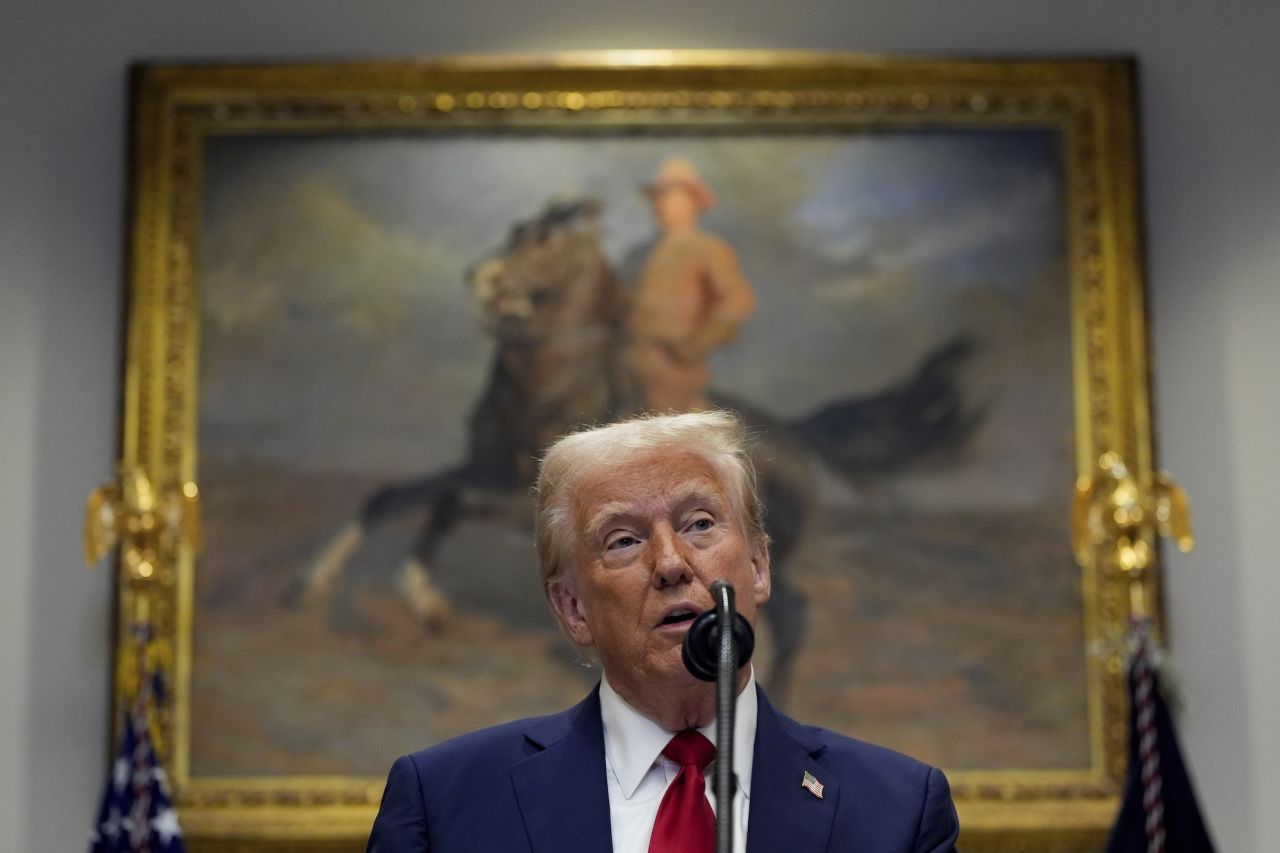
Is Selling “Trump 2028” Merchandise a Constitutional Violation?
Selling “Trump 2028” merchandise does not, in itself, constitute a violation of the Constitution. Private citizens and political figures are allowed to sell merchandise, advocate ideas, and even propose changes to constitutional law. However, officially running for or winning a third presidential term without constitutional amendment would be illegal under the current 22nd Amendment.
Therefore, while the merchandise is legally permissible, the symbolism and potential implications have understandably raised concerns about respect for constitutional principles.
Broader Implications
The controversy surrounding “Trump 2028” merchandise reflects deeper tensions within American democracy about constitutional adherence, political norms, and the limits of executive power. Historians and legal scholars often emphasize that the peaceful transfer of power and adherence to constitutional term limits are hallmarks of American democratic stability.
Comparisons to leaders in other nations who have sought to extend their rule beyond constitutional limits, such as Russia’s Vladimir Putin, have been invoked by critics. These comparisons serve to underline fears that democratic norms could be eroded if political leaders publicly entertain the idea of exceeding constitutional term restrictions.
Moreover, the intense public reaction also reveals the ongoing polarization of American political discourse, where even symbolic gestures like merchandise can ignite widespread debate and division.

Conclusion
Donald Trump’s “Trump 2028” merchandise has once again placed him at the center of national controversy. While selling hats and shirts promoting a 2028 campaign does not break any laws, it raises serious questions about constitutional adherence and political messaging.
Under the 22nd Amendment, no individual is permitted to be elected president more than twice. If Trump were to win in 2024, any future attempt to seek another term would be constitutionally prohibited. As the nation moves closer to the 2024 election, discussions surrounding term limits, democratic principles, and political accountability will likely remain a critical part of the public conversation.
Sources:
- National Archives: 22nd Amendment
- Official Trump Store
- UCLA School of Law: Professor Richard Hasen on Election Law
- Congressional Record: Statements from U.S. Representative Andy Ogles